First Arrival in Quito: A Bird’s-Eye View of the Andes
When I first flew to Quito, I didn’t have many specific expectations. I knew it was a high-altitude city, the capital of Ecuador, and home to a historic center designated as a World Heritage Site.
Yet, what truly left a lasting impression wasn’t these labels, but the scene as the plane began its descent.
Looking out the window, the Andes Mountains unfolded across the landscape like a massive, pleated tapestry. Clouds drifted slowly through the valleys, while the city itself looked like a puzzle piece nestled between the ridges.
As the plane descended, I could distinctly feel the change in air pressure and the unique atmosphere of the high altitude. In that moment, I knew I had arrived in a completely different world.
The First Breath of Highland Air: A City Quiet Yet Weighty
Stepping out of the airport, my first sensation was that the air felt light, yet my breathing required some adjustment.
Quito sits in a high-altitude valley; this environment can cause slight initial discomfort, but it also brings a peculiar sense of clarity.
As the taxi headed toward the city center, rolling hills and scattered buildings lined the road. The city wasn’t chaotic like many other South American capitals; instead, it moved to a measured, restrained rhythm. There were no overcrowded streets or ostentatious modern architecture.
It felt more like a quiet city cradled by mountains. I gazed out the window for a long time, watching the city’s silhouette shift with the contours of the terrain.
It was a unique feeling—you weren’t just entering a city; you were entering the landscape itself.
Entering the Old Town: Time Suddenly Slows Down
Early the next morning, I decided to head straight for the heart of the city: Quito’s Old Town.
Designated a World Heritage Site, this area holds the greatest concentration of the city’s history.
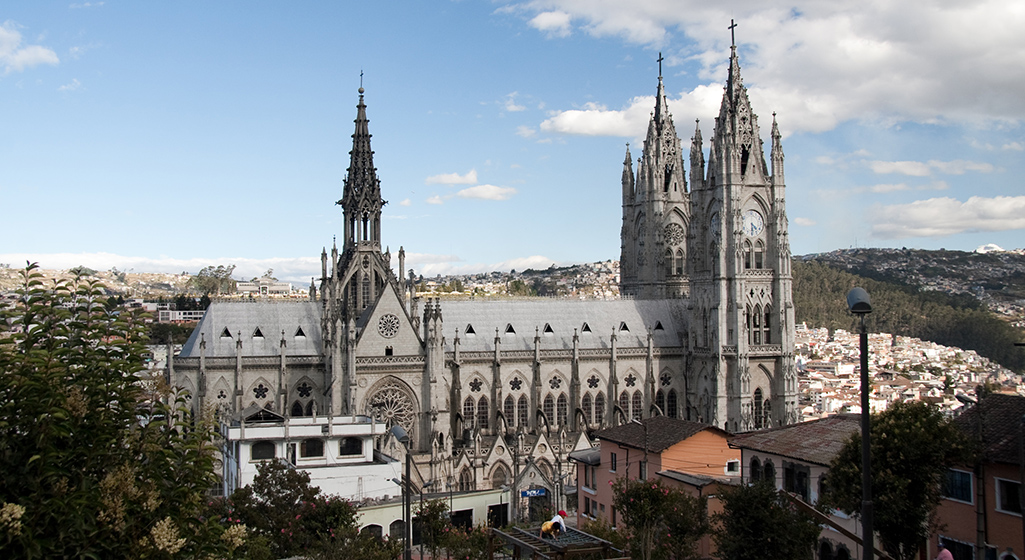
Stepping into the Old Town, I felt a distinct sense of being displaced in time. The streets narrowed, and the buildings became lower. Cobblestones crunched softly beneath my feet. Well-preserved colonial-era buildings lined the streets, a blend of white, yellow, and brick-red hues. Sunlight bathed the walls, creating an atmosphere that was soft and serene.
Unlike many tourist cities, there was no overwhelming commercial vibe here. It is more a state where “real life and history coexist.” I strolled through the streets without a specific destination, simply letting the city guide me.
Plaza Grande: The city’s heart, yet with a restrained pace
I arrived at Plaza Grande in Quito in the morning.
Government buildings, churches, and historic structures ring the square. To my surprise, however, it wasn’t noisy; in fact, it was quieter than I had imagined. Locals sat on benches soaking up the sun, pigeons moved leisurely across the plaza, and there were few tourists around.
I sat at the edge of the square, observing my surroundings. A cool breeze drifted in from the valley. It was a hard-to-describe feeling—a capital city, yet devoid of the usual tension associated with one.
The Cathedral and its golden interior: Solemnity amidst the quiet
Next, I entered Quito Cathedral. While the exterior is a simple white structure, the interior is rich in detail. Wooden elements, gold ornamentation, and religious murals combine to create a space of solemnity. Sunlight streamed in from high windows, casting a glow on the floors and walls, and the entire space was hushed.
I sat inside for a long time—taking no photos, in no rush to leave—simply absorbing the serene atmosphere. Unlike the openness of the city outside, this was an inward, contemplative experience.
La Compañía de Jesús: The place that held me the longest
If there is one building in Quito’s Old Town that truly stunned me, it is La Compañía de Jesús Church.
I stopped in my tracks the moment I stepped inside. The interior is completely covered in gold ornamentation; every inch of space is filled with intricate carvings. The lighting is soft, yet it makes the entire space appear incredibly opulent.
This visual impact isn’t one of “gaudiness,” but rather a dense expression of accumulated history. I wandered through the space for a long time, moving from corner to corner. Looking up, looking down, and turning around revealed different details from every angle. The sheer complexity made me realize that this city’s history is far richer and deeper than I had imagined.
Taking the cable car: From the city to the edge of the sky
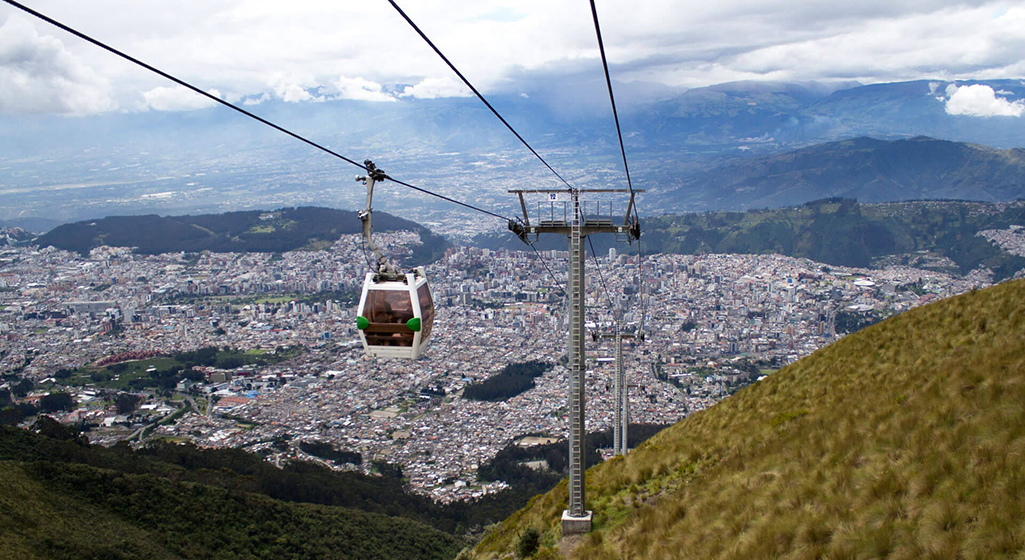
In Quito, I decided to take the cable car up the mountain. The TelefériQo Quito offers a route to a high-altitude viewpoint.
As the cable car slowly ascended, the city began to shrink below me. Buildings turned into blocks of color, roads became mere lines, and the valley gradually unfolded into view. The air grew crisper and cooler. As the cable car reached the summit, I could see almost all of Quito. The city lay cradled by mountains, with clouds drifting in the distance.
The perspective was breathtaking. You suddenly realize that the city is truly “nestled within the mountains.”
Silence at the summit: the wind takes center stage
Up there, the wind was strong. Few people spoke; everyone was absorbed in the scenery. There was no clamor, no commercial bustle—just the coexistence of nature and the city.
I found a rock to sit on and watched the clouds drift by. Time seemed to slow down here. This quietude wasn’t an emptiness, but a state of being shaped by the landscape itself.
The Old Town at night: lights soften the history
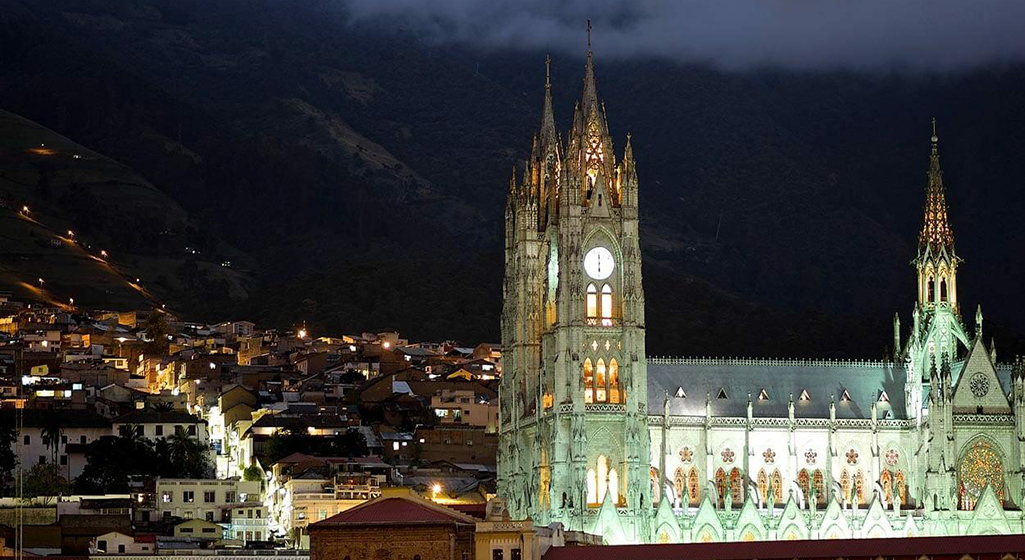
I returned to the Old Town after dark. The daytime bustle had faded, and the streets had grown quiet. As the lights came on, the outlines of the buildings softened.
Quito’s Old Town takes on a completely different character at night. You aren’t overwhelmed by a barrage of details; instead, you experience an overall atmosphere. I strolled slowly along the streets, occasionally passing small restaurants where music drifted from the windows, yet the prevailing mood remained one of tranquility.
A highland city meant to be savored at a slower pace
As I left Quito, the deepest impression I carried with me wasn’t of any single landmark, but of the city’s overall essence. It is a city that feels no rush to show itself off.
It wraps itself in mountains, grounds itself in history, and expresses itself through quietude. From the cobblestone streets of the Old Town to the cloud-filled vistas at the summit, from the golden interiors of its churches to the afternoon sunlight in the plazas, every element conveys the same message:
Slow down, and only then will you truly see it.