First Arrival in Quito: Hotels as a Gateway to Understanding the City
When I first arrived in Quito, I expected to be drawn primarily to the Old Town, the mountain scenery, and the World Heritage architecture. Yet, it was the hotels that truly allowed me to quickly immerse myself in the city’s atmosphere.
Traveling in a high-altitude city makes the choice of accommodation more significant than one might imagine; the mild fatigue caused by the altitude, the undulating terrain, and the distance between the Old and New Towns all turn “where you stay” into an integral part of the travel experience.
For this trip to Quito, I deliberately selected five hotels with distinct styles: a boutique hotel converted from a historic mansion, a modern high-rise, and accommodations offering spectacular mountain views. Each check-in and check-out felt like rediscovering the city from a fresh perspective.
First Stop: Hotel Casa Gangotena—Stepping into the History of the Old Town
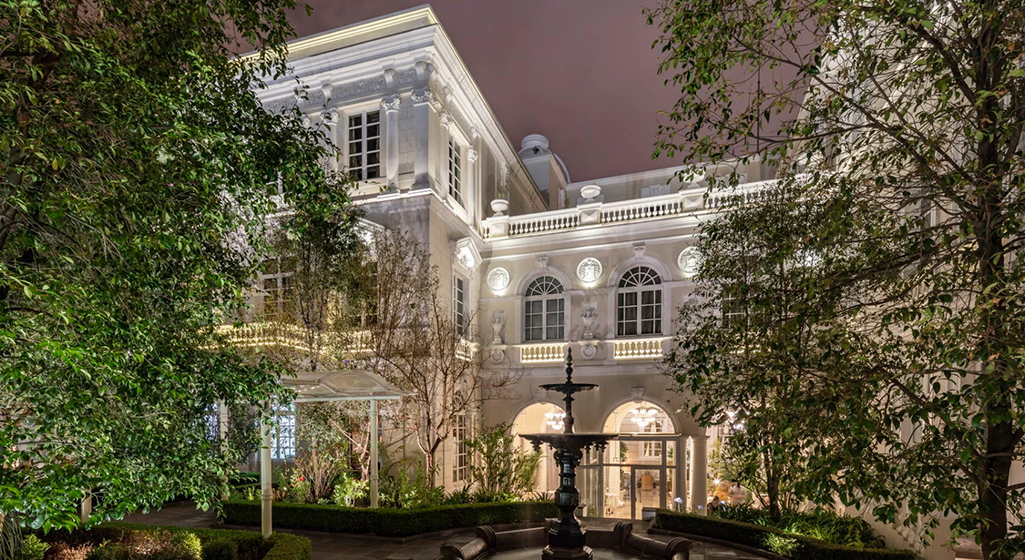
My first stop was Casa Gangotena Quito. Situated in the heart of Quito’s Old Town, it is a beautifully restored colonial-era mansion.
Stepping through the entrance, I almost forgot I was there to check in. Soaring arches, classical furniture, a tranquil courtyard, and soft lighting combined to create an atmosphere of unhurried elegance. As staff guided me down the corridor, the gentle echo of footsteps on the stone floor was the only sound.
The room design was understated, with every detail executed with restraint. Outside the window lay the streets of the Old Town. Waking up to sunlight filtering through the curtains, I could hear the city slowly stirring to life. From that first day, I realized this was more than just a hotel; it was a living piece of Quito’s history.
Second Stop: JW Marriott Quito—A Different Side of the Modern City
My second hotel was the JW Marriott Quito. Compared to the Old Town property, the pace here was distinctly different.
With its high-rise structure, spacious lobby, and modern amenities, the hotel instantly shifted the vibe from historic charm to a contemporary urban business setting. My room was on an upper floor, offering sweeping views of the city and the surrounding mountains.
In the early morning, mist would drift slowly through the valleys, and the city seemed to lie gently spread out across the landscape below. This hotel offered a more “real-world” urban experience. It doesn’t tell historical tales; instead, it offers a stable, comfortable, and standardized foundation for travel.
One evening, while working by my room’s window, I watched the distant lights flicker on one by one. That quiet, elevated perspective gave me a more rational understanding of Quito.
Stop 3: Hotel Patio Andaluz—A Quiet Corner Hidden in the Old Town
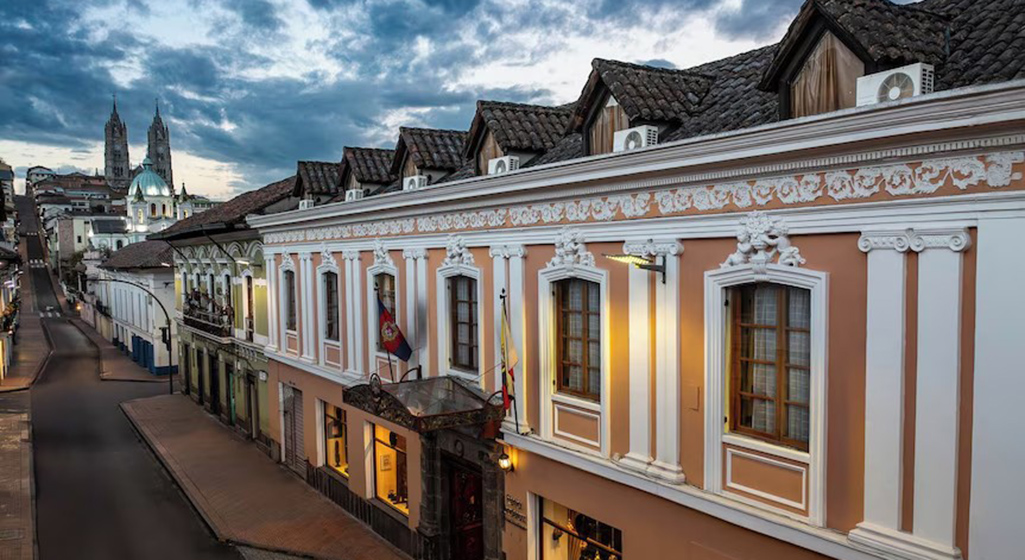
The third hotel is Hotel Patio Andaluz Quito. Also located in the Old Town, it possesses a more understated character than Casa Gangotena.
Upon entering, you find a courtyard surrounded by greenery. Sunlight filters down from above, creating a play of dappled light and shadow. While it lacks dramatic visual impact, the space offers a wonderfully comfortable sense of balance. The rooms lean towards a traditional style but remain peaceful and quiet.
Returning to the hotel at night, the sounds of the street were almost entirely shut out. I sat in the courtyard with a hot drink; the silence wasn’t an empty void, but rather a state where time seemed to slow down.
Stop 4: Hilton Colon Quito—The Rhythmic Heart of a Highland City
The fourth hotel is Hilton Colon Quito. Situated in the New Town, it has a distinctly international feel.
The lobby is spacious, bustling with people and a faster pace of activity. It serves as a convenient base for traveling to various parts of the city. The rooms feature a standard business design but offer excellent views, looking out over the city as it stretches toward the distant hillsides.
During my two-day stay, the experience was defined by a sense of urban mobility—heading out during the day and returning to rest at night. Unlike the hotels in the Old Town, which emphasize atmosphere, this one prioritizes efficiency and comfort. In a sense, it functions more like an urban hub than a destination in itself.
Stop 5: Hotel Mama Cuchara—A Blend of Design and Old Town Life
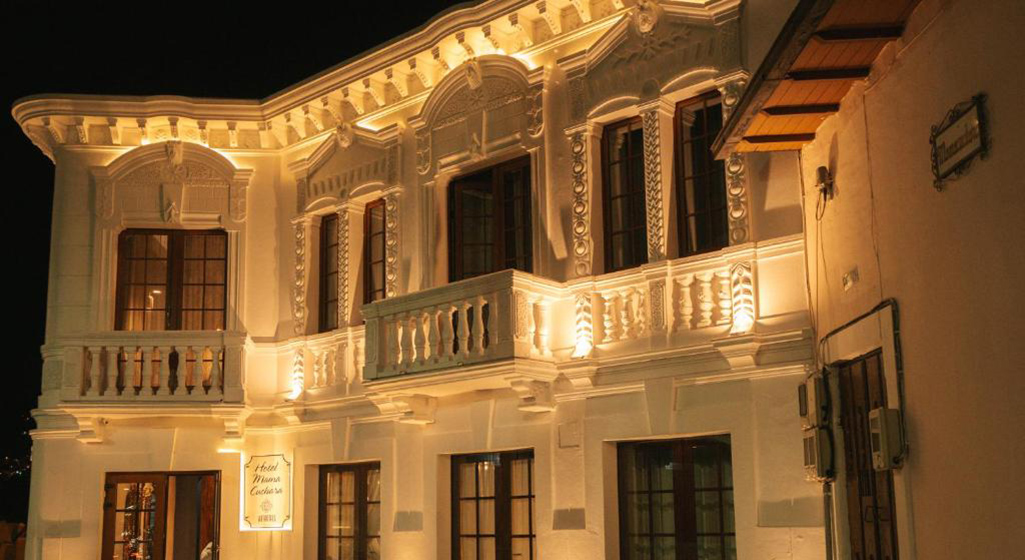
The final hotel is Hotel Mama Cuchara Quito. It is one of my personal favorites in the city. Located on the edge of the Old Town, it is housed in a converted historic building that incorporates significant modern design elements.
The interior is striking, featuring clean lines and warm colors while preserving the original architectural structure. The rooftop terrace is a highlight, offering a panoramic view of the Old Town and the mountains beyond. I spent an afternoon there, watching the clouds drift slowly over the city as the wind blew in from the valley.
In that moment, it struck me that this hotel strikes a perfect balance between the historical and the contemporary.
In a high-altitude city, your choice of accommodation shapes what you see
As I left Quito, I realized that what lingered in my memory wasn’t a specific hotel room, but rather the distinct “versions” of the city revealed by different spaces. There was a Quito that felt historic, one that was modern, one that was tranquil, and another that was open and expansive.
Hotels served as windows, allowing me to view the same city from a variety of perspectives.