On an early winter morning, as I stepped out of a small inn in the old town of Toulouse, the air was filled with the earthy scent of damp soil and fallen leaves after a light rain. Toulouse, known as La Ville Rose (The Pink City), still glows with a gentle radiance under the grey-blue winter sky. It is neither as grand as Paris nor as busy as Lyon, yet it holds a quiet charm that pulses with life.
For this trip, I carefully planned a day-long itinerary through Toulouse that would take me through its rich history, vibrant culture, and serene natural landscapes. Without the bustling crowds of tourists, winter in Toulouse feels even more tranquil, allowing me to explore the soul of the city at my own pace.
1. Place du Capitole – Starting from the Heart of the City
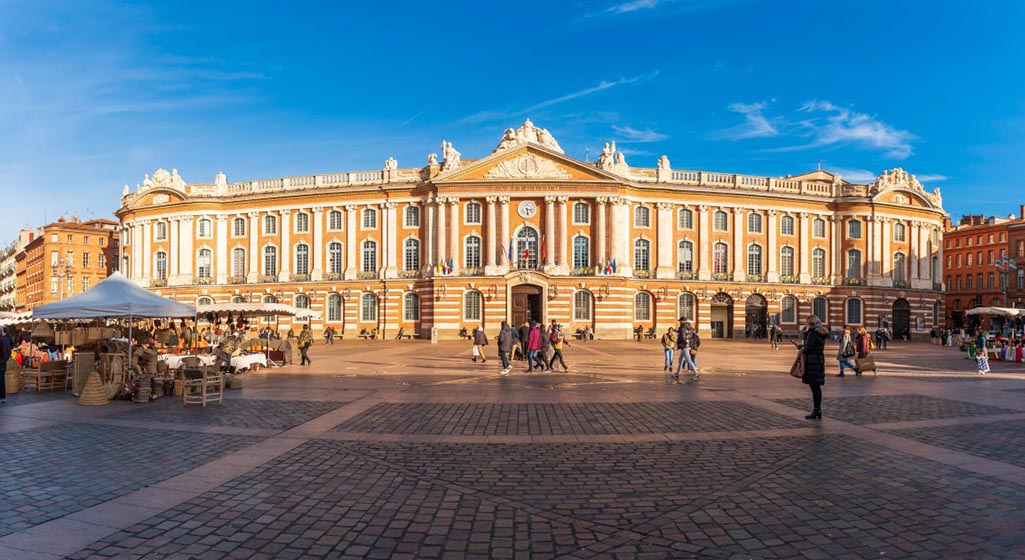
At 8:30 in the morning, I arrived at Place du Capitole. The winter sun had yet to rise fully, and a delicate mist lingered over the square like a silk veil. The ancient outlines of buildings gradually emerged in the soft morning light, giving the scene a timeless feel. This square is the vibrant heart of Toulouse, surrounded by the Capitole building (City Hall), a theatre, charming cafés, and boutique shops—an ideal starting point for learning about the city’s storied past.
The Capitole building, constructed in the 18th century, features an eye-catching façade of red brick and white stone that glows softly in the early light. In the winter, the absence of bustling tourist crowds allows for a quiet appreciation of its elegant sculptures, arcades, and symmetrical beauty. Inside, parts of the city hall are open to the public, offering a glimpse into the city’s grandeur. The grand Salle des Illustres, adorned with massive oil paintings, ornate columns, and ceiling frescoes, feels more like a palace than a government building—each corner tells a story of Toulouse’s artistic and civic heritage.
After taking a few photos and absorbing the tranquility of the square, I stopped for a quick cup of hot coffee at a nearby café. The warm aroma of roasted beans and buttery pastries filled the air, offering a comforting contrast to the morning chill. With my hands wrapped around the steaming cup, I felt the warmth slowly seep through, pushing away the cold. I tightened my scarf, took a deep breath of crisp air, and set off again with renewed energy.
2. Couvent des Jacobins – Immersed in Gothic Grandeur
A short walk from the square led me through narrow lanes and quiet corners to the Jacobins Convent, a monumental example of Southern French Gothic architecture dating back to the 13th century. The building’s red brick construction harmonizes perfectly with the city’s overall hue, lending it a warm, earthy tone even in the depths of winter. From the outside, it might appear austere, but stepping inside reveals a world of breathtaking beauty.
The moment I entered, I felt as though I had traveled back to the Middle Ages. The air was still, cool, and laced with the faint scent of old stone and candle wax. The convent’s most iconic feature is the “palm tree” column—a single, slender pillar that rises toward the heavens before splitting into delicate ribbed arches that radiate like palm fronds across the ceiling. It’s a masterpiece of engineering and imagination, and the diffused winter light streaming through the stained-glass windows only enhances its ethereal quality.
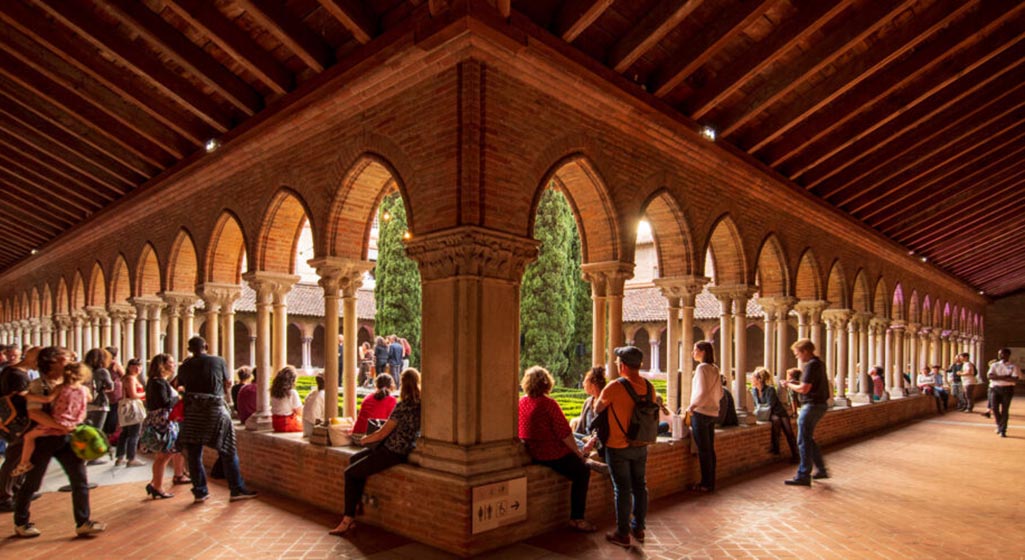
I wandered slowly through the cloister, where the hush of centuries seemed to linger in every corner. Fallen leaves had drifted into the courtyard, adding a golden touch to the otherwise muted tones of stone and grass. Birds hopped silently along the edges of the cloister, undisturbed by my presence. Once a center of theological scholarship, the convent now serves as a peaceful haven for reflection and inspiration. In one of the chapels lies the relics of Saint Thomas Aquinas, a towering figure in medieval philosophy, whose presence still seems to watch over the sacred space. The entire experience felt like stepping into a living manuscript of medieval devotion and beauty.
3. Garonne River – Where Nature and City Intertwine
By midday, the winter sun finally broke through the clouds, casting a golden hue over the city. I meandered through labyrinthine alleyways, passing shuttered windows, ivy-covered walls, and the occasional scent of baking bread, until I reached the banks of the Garonne River. In winter, the river is quieter and more introspective than in the busy summer months—its glassy surface reflects not only the buildings but the mood of the season.
I walked along the bank, the cold air tingling on my cheeks, and admired the shimmering reflections of the Hôtel-Dieu Saint-Jacques and the stately Pont Saint-Pierre. The calm, steady flow of the water seemed to carry with it centuries of stories and songs. Despite the season’s chill, locals were out jogging or walking their dogs, bundled in scarves and coats, a testament to the city’s active spirit. Life flowed steadily on, unhurried and grounded.
There were a few open book stalls and craft vendors set up along the river, even in winter—a pleasant surprise. They sold vintage books with faded covers, old black-and-white photographs of Toulouse, and handcrafted wooden items. I picked up a 19th-century postcard of the Capitole and tucked it into my coat pocket, planning to write a few lines that evening, capturing the quiet wonder of the day.
Pausing briefly on the Pont Saint-Pierre, I leaned over the railing and let my gaze drift across the skyline. The bridge’s graceful arches framed the city beautifully, while the soft afternoon light lit the rooftops in a warm blush. For a moment, it felt as if the city itself was holding its breath, caught in a serene pause between history and the present.
4. Basilique Saint-Sernin – Exploring a Thousand-Year-Old Treasure
The Basilica of Saint-Sernin was a highlight I had long anticipated. Built in the 11th century, it is one of the largest surviving Romanesque churches in Europe and a major stop on the pilgrimage route to Santiago de Compostela. In winter, the basilica’s façade appears solemn and weathered, its red brick and grey stone marked by time.
Stepping inside, I was instantly enveloped in a solemn stillness. The towering nave, solid stone columns, and preserved vaulted ceilings exuded timeless grandeur. Beneath the church lies the crypt, said to house the relics of Saint Sernin. I sat in silence before the altar, watching colored light spill through the stained-glass windows, feeling deeply at peace.
Outside, pigeons fluttered around the square, and a few local artists sketched nearby. The blend of historical majesty and modern creativity underscored the multi-layered charm of Toulouse.
5. Musée des Augustins – A Journey Through Art and Time
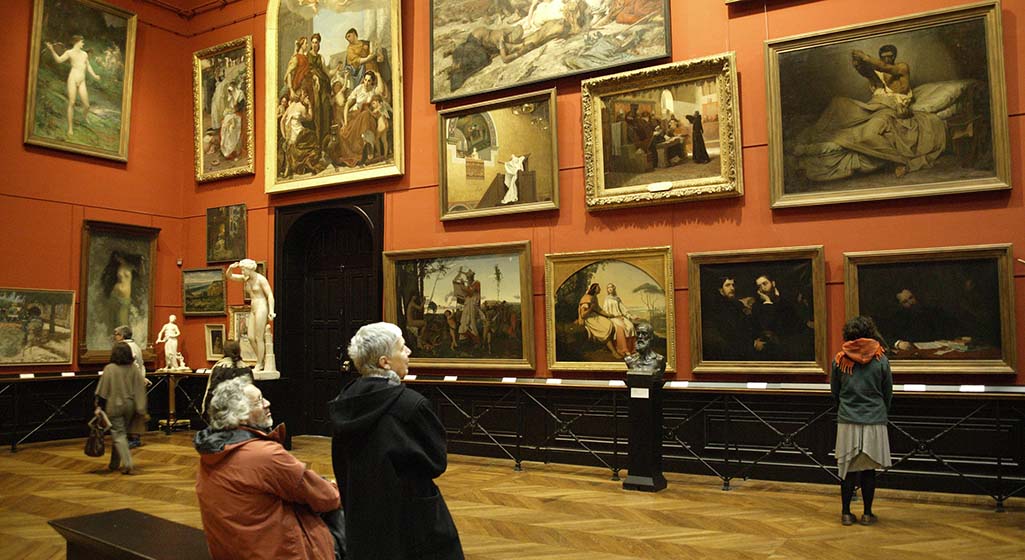
At 3 PM, I arrived at the Musée des Augustins, housed in a former 14th-century Augustinian monastery and one of the oldest museums in France. The sparse winter crowd made it perfect for slow, quiet exploration.
The museum contains an extensive collection of sculptures and paintings from the Middle Ages to the 19th century. Its Gothic cloister, stone sculpture gallery, and long painting hallways form a tranquil, sacred space. I was particularly drawn to several powerful oil paintings from the French Revolution, their intense colors and historic themes evoking raw emotion.
The museum also features a small courtyard garden with a fountain surrounded by evergreen shrubs. I rested briefly on a bench, jotting down a few lines in my notebook to capture the day’s impressions and the thoughts it had stirred.
6. A Winter Dinner in Toulouse – A Warm Embrace of Local Flavors
As night fell and the cold deepened, I decided to end my day with a traditional Toulouse dinner. I chose Le Bibent, a restaurant in the old town with an opulent interior: golden decor, warm lighting, and intricate woodwork that transported me to a 19th-century Parisian salon.
I ordered the city’s signature dish—Toulouse sausage with lentils (Saucisse de Toulouse aux Lentilles). The sausage was perfectly seasoned and chewy, paired with tender, slow-cooked lentils that warmed me from the inside out. A glass of local red wine complemented the dish beautifully as I savored every bite, reflecting on the day’s experiences.
Farewell to Toulouse’s Winter Night
The night in Toulouse remained serene. The streets glowed under soft lamplight, with only a few pedestrians passing by. On my way back to the inn, I once again crossed Place du Capitole. The marble tiles in the square were now adorned with light projections resembling a celestial map—like a slice of the universe had unfolded before me.
Standing at the city’s heart, I felt a sense of comforting familiarity—not from the weather, but from the warmth of its culture and the humanity of its people.
Though the deep dive lasted only one day, the profound history, vibrant culture, and peaceful nature of Toulouse left an indelible mark on me. No matter where my journey leads next, this winter day in Toulouse will remain a tender chapter in my travel memories.